
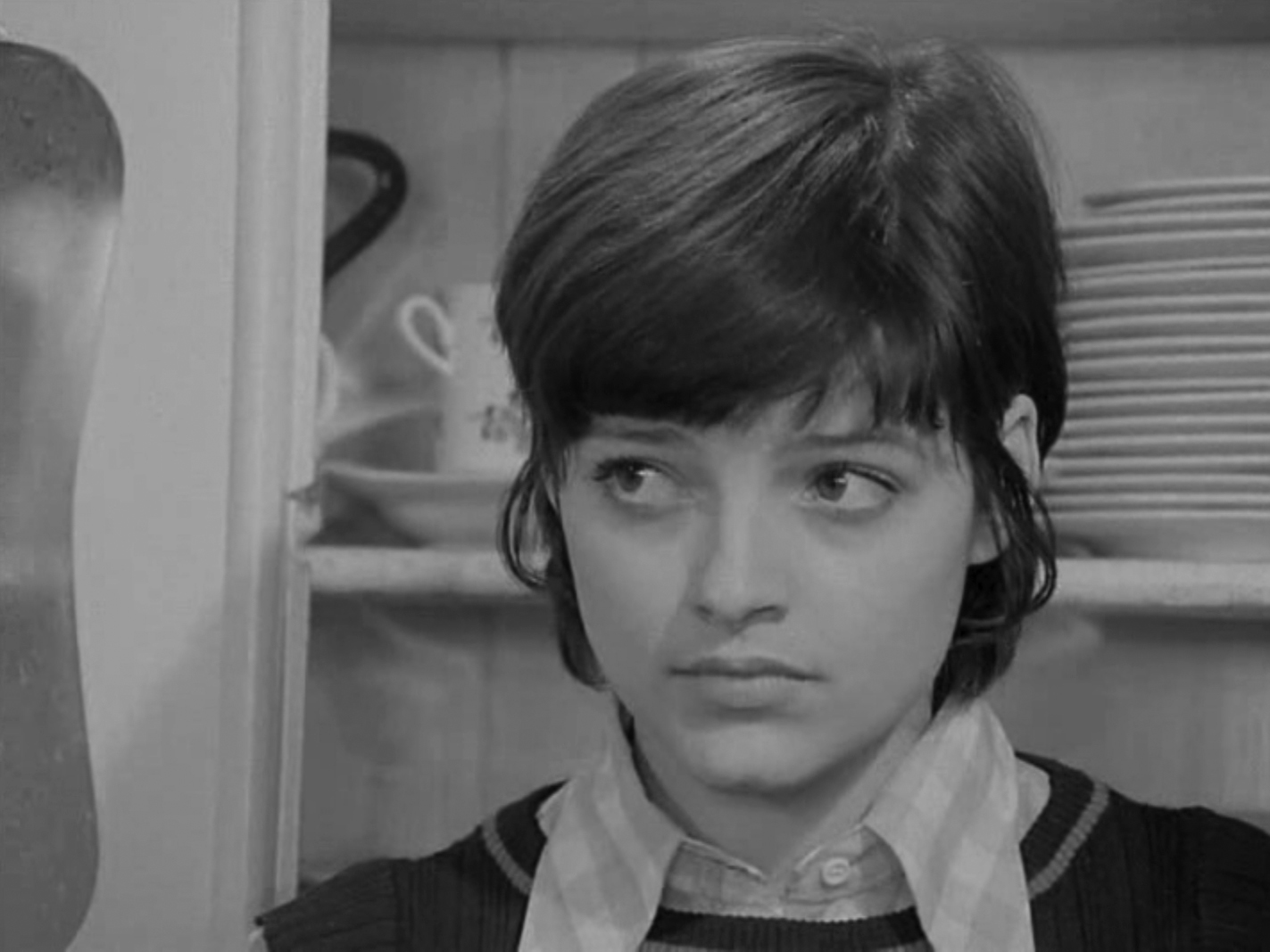
By 1989, Nina Hagen was well-known in West Germany, but few people there knew anything about her past. She was the operatic, punk demon lady from the far side of the moon spouting mystic mumbo-jumbo and singing like nobody else. Then the Wall fell (Mauerfall) and we Westerners saw a whole other side of her—the pop pixie, singer of novelty songs, adorable and immensely talented. But few of us were ready for Today is Friday (Heute ist Freitag), a TV movie from 1975 in which we get to see Nina Hagen as we’ve never seen her before.
Long before Hagen reinvented herself as a punk goddess, she was on her way to becoming the most popular singer in East Germany. Her GDR persona was that of a spunky woman-child, a little petulant and coy. Her big breakthrough came in 1974 with “Du hast den Farbfilm vergessen” (You forgot the color film), a song in which Nina scolds her boyfriend Mischa for forgetting to bring the color film on their vacation. In it, she complains that no one will believe her when she tells them how beautiful everything was, because the pictures are black-and-white. The unspoken joke here is that no one believes her because so much of the East German landscape was cast in shades of gray. Hagen recorded the song as the lead singer in a band called Automobil. Later, she joined Fritzens Dampferband, where she continued her rise to stardom with the hit “Wir tanzen Tango” (We dance the Tango), and the remarkably silly, “Hatschi Waldera.”
Things were looking up for Hagen, then her step-father, folksinger Wolf Biermann, was expatriated for his outspoken criticisms of the East German bureaucracy. His wife—Nina’s mother—was the popular film star, Eva-Maria Hagen. She applied for permission to join her husband in the West and it was granted. Nina decided to follow suit. At first, the SED balked at letting her join her parents, but when she let them know that if she wasn’t allowed to emigrate, she would become the next Wolf Biermann they quickly changed their minds.
Arriving in West Germany, her agent did something very smart. He told her to go to London to see what was happening in rock’n’roll. The year was 1976, and punk was in full bloom. Nina met and became friends with many British musicians, most notably Lena Lovich, who was a big influence on Hagen’s style. Hagen returned to West Germany in 1977 with a whole new look and sound, and the rest, as they say, is history.
Today is Friday is the story of one important weekend in the life of Jutta, a young woman who thinks she might be pregnant. After going to the doctor, she is informed that because “today is Friday,” she won’t know the results of her test until next Monday. This gives her a weekend to ruminate on the course she wants to take. What follows is lots of walking and talking in the interminable wait for Monday to come. It’s similar to Cléo from 5 to 7, but the story spans an entire weekend instead of two hours, and the leading actress is waiting for a pregnancy test result, rather than a cancer test result. Faced with the possibility of pregnancy, she wonders if she should have an abortion or keep the baby? The film leans toward the latter, but remains as noncommittal as possible.1
Prior to Today is Friday, Hagen had appeared in an episode of the short-lived TV series, ABC der Liebe (ABCs of Love), and in the TV-movie, Heiraten/Weiblich (Married/Female). In both of these, she played opposite her mother (Eva-Maria Hagen). Today is Friday was her first solo foray into film. She only appeared in a few DEFA films before heading West, but none of the other films focus on her to the same extent as Today is Friday does. She is the lead character in this film, and she carries it all the way.
One of the more remarkable aspects of this film—one might even say shocking—is its lack of glamour. Hagen is presented as an utterly ordinary woman. She wears gingham shirts with butterfly collars, sweater vests, and the ugliest mommie jeans in the history of denim. Half the time, she walks around with a knit cap pulled down over her head. This is not Nina the glamorpuss, it’s Nina the schlub. Nonetheless, the camera likes Hagen. The film rarely takes its focus off her and follows her movements as if fixated on her, sometimes peeking in from other rooms to watch her.
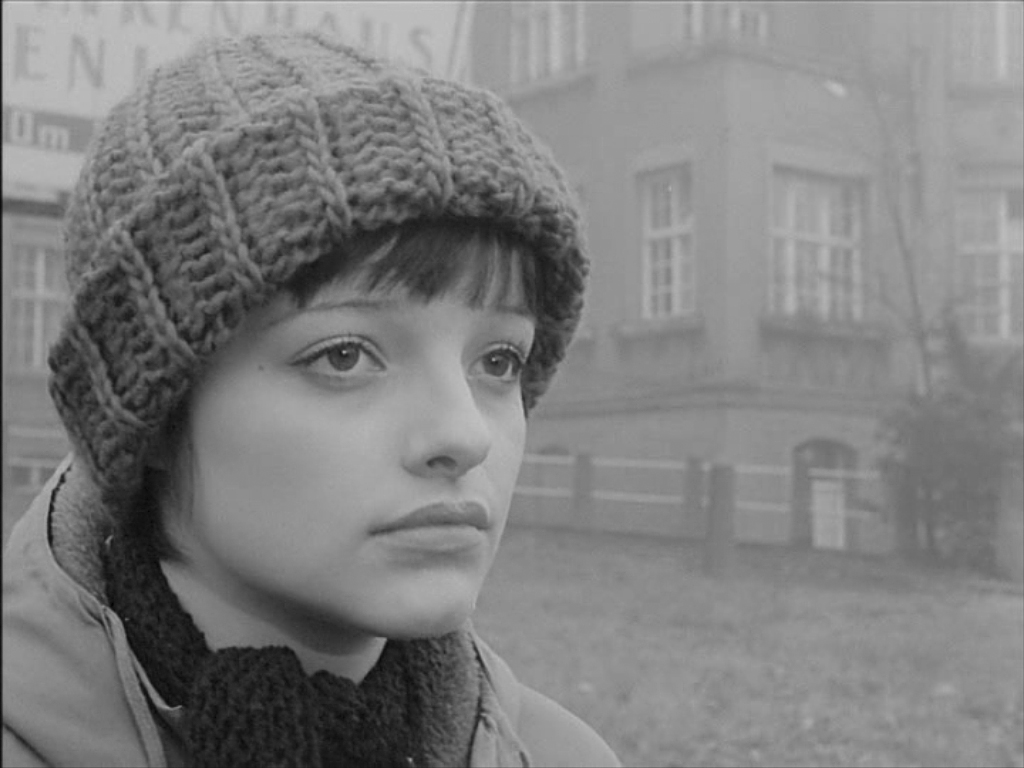
It’s this camerawork that is the most interesting aspect of the movie. Mostly handheld, the camera follows Hagen around in the cinema verité style popular with Cassavetes and the early French New Wave (whose films also often shared the obsession with their leading ladies). At times, it feels like a documentary. Whether this is thanks to the cinematographer, Roland Dressel, or the director, Klaus Gendries, is hard to say. Dressel was also responsible for the excellent cinematography in Jadup and Boel, and The Bicycle. Before he became a cinematographer, he worked as an assistant cameraman on a variety of East German films, including the classic Hot Summer, and Konrad Wolf’s first film, Einmal ist Keinmal (Once Doesn’t Count). This wide variety of films helped make Dressel an extremely versatile cinematographer, adapting his style to match the story. Unlike some cinematographers whose work is obvious no matter who’s directing (Gordon Willis immediately comes to mind) Dressel has no signature style (although his work in Jadup and Boel stands out for its unique style in the flashback scenes). Dressel died in 2021.
Likewise, Gendries seemed less concerned with branding himself as an auteur than getting good performances out of his actors. This isn’t surprising since Gendries got his start at DEFA as an actor, appearing in films such as The Baldheaded Gang and The Second Track. In the GDR, directors were mostly assigned to work at either DEFA or its television equivalent, DFF (Deutscher Fernsehfunk). Klaus Gendries was one of those assigned to DFF, so most of his work appears in the form of made-for-TV movies. He started directing in theater in the 1950s, and moved to television in 1963 with the TV-movie version of Guy de Maupassant’s, Der Morin – Das Schwein (That Pig of a Morin). He scored a big hit with Florentiner 73, a comedy about a young pregnant woman dealing with her living situation and quirky neighbors. Florentiner 73 starred his wife, Edda Dentges. The TV movie was so popular that it spawned a sequel, Neues aus der Florentiner 73 (News from Florentiner 73). He also helmed the popular TV mini-series, Aber Vati! (But Dad!).
Gendries’s work in television served him well after the Wende. Unlike many of his DEFA counterparts, he made the transition from East German television to unified German television. He didn’t have as many opportunities to make TV movies, but he worked on many popular television series, including Der Bergdoktor, Für alle Fälle Stefanie, and In aller Freundschaft. He retired from filmmaking in 2000 and died in 2023.
Ironically, the theme song for Today is Friday is not sung by Nina Hagen, but by Veronika Fischer. Veronika Fischer was the most popular female rock singer in East Germany. She had several hits in East Germany and appeared in the film DEFA-Disko 77. Like Hagen before her, Veronika Fischer immigrated to West Berlin before the wall came down. Unlike Hagen, however, she did not take advantage of the situation to reinvent herself and found little success in the West. It was only after the Wende, when she could return to the former East Germany, that her career was revived. She’s still popular in the Eastern states and continues to release albums.
The theme song was written by Michael Heubach, who wrote the music for “Du hast den Farbfilm vergessen” and other songs that Nina Hagen made popular. Heubach was a founding member of Hagen’s first band, Automobil. When she decided to move on, Heubach disbanded Automobil and joined Lift, one of East Germany’s few art rock bands. Heubach had several hits in the GDR, but none since reunification. He continues to write music and work as a music producer. In 2021, “Du hast den Farbfilm vergessen” received renewed attention when the former German Prime Minister Angela Merkel chose it as one of the three songs to be played as part of the Großer Zapfenstreich, a military tattoo held in honor of her retirement.
Today is Friday is charming enough, but the fact that it is black-and-white and consists mostly of people discussing the pregnancy issue makes it an unlikely candidate for subtitling anytime soon. Nonetheless, any fan of Nina Hagen is going to want to add this film to their collection.
1. Abortion was legal in East Germany, but, as in the West, it was still controversial. East Germany’s version of Roe v. Wade (Gesetz über die Unterbrechung der Schwangerschaft) was passed in 1972, giving women the right to choose abortion without requiring a medical reason. The passing of this law was the only time that the People’s Chamber (Volkskammer) did not vote unanimously on a law’s passage (the only other time they split their vote was the election of Egon Krenz as the GDR’s leader just before the Wall came down). West Germany wouldn’t follow suit for another four years, and even then, only after two years of court challenges and legal wrangling.


If you like what I do here and would like to let me know, you can buy me a cup of coffee by clicking on the button to the left.
© Jim Morton and East German Cinema Blog, 2025. Unauthorized use and/or duplication of this material without express and written permission from this site’s author and/or owner is strictly prohibited. Excerpts and links may be used, provided that full and clear credit is given to Jim Morton and East German Cinema Blog with appropriate and specific direction to the original content.
 East German Cinema Blog
Thank you for the post!
Is there any chance that this film can be found in Internet? I could get a DVD on Amazon, but it’s too hard and expensive in my country 😦
Sadly, it’s not currently available. It was on YouTube when I wrote the article, but those links are quickly taken down (which is why I seldom post them). Best alternative is to do occasional checks for it and see if anything turns up.