
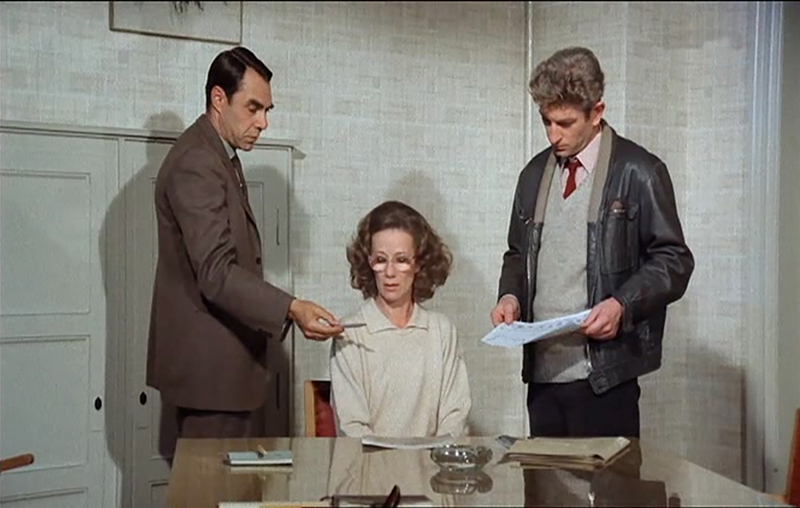
The Persons Involved (Die Beteiligten) was released in June 1989. It was the last Kriminalfilm (Krimi) released by DEFA before the fall of the Berlin Wall. It’s based on an actual crime that occurred back in the early sixties. The film follows the story of two police inspectors investigating the drowning death of a young woman who apparently strayed too close to the water while picking pussy willows. She was with her boss, Willi Stegmeier, (Jürgen Zartmann), and his personal secretary Anna Sell (Karin Gregorek). Erwin Müller (Gunter Schoß), the older inspector, is a well-respected member of the community and is loath to even consider that a crime had been committed. He chalks the woman’s death up to suicide. Hans Gregor (Manfred Gorr), the younger inspector, is new to the town and has already been in trouble for filing a case too soon. He doesn’t plan on making that mistake again. He begins to investigate, disrupting the status quo in the community and endangering his relationships with comrades and friends.
The film was directed by Horst E. Brandt. Before becoming a director, Brandt was a respected cinematographer, and you can see his work in Black Velvet, A Lively Christmas Eve, the second Ernst Thälmann film, and several Das Stacheltier short films. Brandt had intended for The Persons Involved to be his directorial debut, but coming as it did after the 11th Plenum, the idea of a movie about a corrupt local official was beyond consideration. They banned Hands Up or I’ll Shoot! for less. The treatment was shelved and forgotten about.
Brandt turned to politically safer fare, but he still seemed to favor crime stories. His first film, Irrlicht und Feuer (Wisp and Fire), was a TV movie starring Günther Simon, based on the book by West German writer Max von der Grün. It was co-directed by Heinz Thiel, with whom Brandt shared directing duties on his first few films. He spent the early seventies working on television shows before returning to the big screen with Between Day and Night (Zwischen Nacht und Tag), a film about the communist writer and president of the National Committee for a Free Germany, Erich Weinert.

At first glance, The Persons Involved is a contradiction in terms. It’s a thriller without any thrills; a realistic police procedural where the crime is solved after the detective interviews several people and researches old files. No one is chased along a dark pier at night, no guns are fired or even drawn, for that matter. There is a murder and a suicide, but we see neither as it happens. Only the aftermaths are recorded. Where the film excels is in its portrayal of the mundanity of ordinary police life, which is not likely to endear it to fans of the crime genre. It fights relentlessly against every convention of a good policier. It is an anti-Krimi.
The two detectives are played by Manfred Gorr and Gunter Schoß. Both men had very successful careers in East Germany, and both continued to work on stage and television after the Wende. Schoß has become a recognized voice in Germany thanks to his work as a narrator of documentaries, radio plays, and audiobooks. Besides his television work, Gorr often works as an actor and director at various theater venues throughout Germany
It’s interesting to compare Gunter Schoß’s role in this film with his role in the earlier film, A Foggy Night (Nebelnacht). In both films, Schoß plays a detective partnered with another detective who does a better job of solving things than he does. In A Foggy Night, his failing is that he’s young and inexperienced. In The Persons Involved, his failing is that he’s older and set in his ways. The man can’t win for losing.
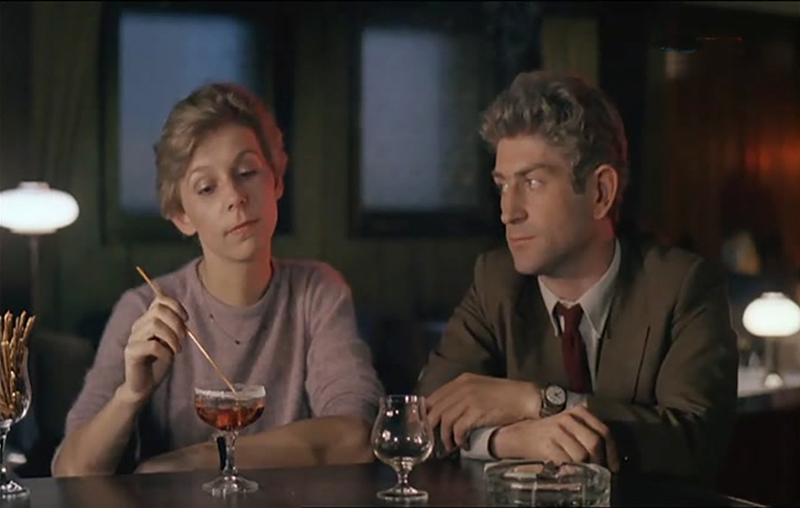
The Persons Involved marks the last feature film for Katrin Knappe, which is a shame, because Knappe is a talented performer with one of the most interesting faces in cinema. She belongs in the same group with Maggie Gyllenhaal, Tilda Swinton, and Giulietta Masina: They may not be classical beauties, but you can’t take your eyes off them when they’re on screen. She probably would have made a bigger splash with her first starring role, that of Boel in Rainer Simon’s Jadup and Boel, but the film was shelved for eight years, and then only released in limited distribution. Since the Wende, Knappe had appeared primarily in plays and currently teaches speech and voice training in Berlin.
Special mention must be given to Karin Gregorek for her performance as Anna Sell, Stegmeier’s put-upon personal secretary. Gregorek was one of those actresses who rarely got the attention she deserved, usually relegated to lesser roles in films. As with most DEFA actors, her background was in theater. Her first feature film was a small part in Slatan Dudow’s Christine, but when the film Dudow was killed in a car accident during filming, and the lead actress was put into a coma, the film sat unfinished on a shelf for eleven years. She’s one of the more memorable faces in Murder Case Zernik, even though she appears uncredited. The Wende didn’t seem to have any effect on her career, and she continued working in films and television until she died in April 2023.
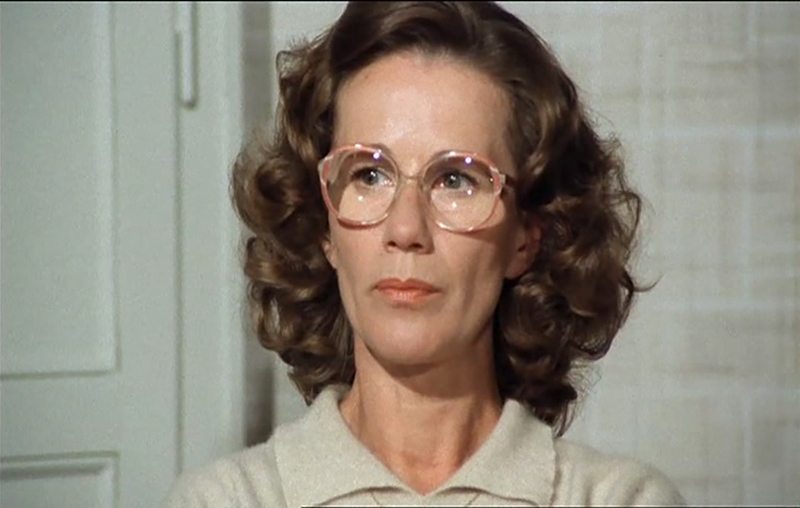
Cinematographer Peter Badel does a great job of capturing the extraordinary drabness of police interiors in the GDR. Everything is as beige as a Band-Aid. Badel, who would eventually specialize in documentaries, gives the film a realistic feel. If the weather is foggy, you feel the dampness. If a person is living a drab existence, you feel that as well. Here, some credit must also be given to production designer Georg Wratsch and Art Director Siegfried Hausknecht. Everything in this film looks and feels grimly real.
The script for The Persons Involved stayed on a shelf until the final days of the GDR, when Brandt decided to try once again to get the film made. This time it was accepted. As it turned out, the film that he’d intended to be his first film as a director was his last. A few months later, the Wall came down, and Brandt, like many other East German film professionals, found it difficult to get work in the new Germany. As far as the DEFA technicians were concerned, it was less a reunification than a takeover. He turned to writing his autobiography Halbnah – Nah – Total (Close, Closer, All the Way), and compiling a reference book on East German cinematographers, Wir, die Bildermacher… (We, the image makers).


If you like what I do here and would like to let me know, you can buy me a cup of coffee by clicking on the button to the left.
© Jim Morton and East German Cinema Blog, 2025. Unauthorized use and/or duplication of this material without express and written permission from this site’s author and/or owner is strictly prohibited. Excerpts and links may be used, provided that full and clear credit is given to Jim Morton and East German Cinema Blog with appropriate and specific direction to the original content.
 East German Cinema Blog
Güzel film tavsiyemdir. Yazı için teşekkürler.
Beğenmene sevindim