

One might think that, by 1988, there was stone left unturned when it came to Nazi-era Germany in the movies. There were films about the Holocaust, the resistance, the start of the war, the end of the war, and the daily lives of soldiers and ordinary people on both sides; there were science fiction films, romances, mysteries and even a few comedies on the subject; so it comes as a surprise that The Actress (Die Schauspielerin) managed to uncover a topic that had been so ignored by filmmakers that most people don’t even of its existence—the Jüdischer Kulturbund.
Founded in 1933, the Jüdischer Kulturbund was a cultural organization established to provide creative outlets for Germany’s Jewish artists who were no longer allowed to work in non-Jewish venues in Germany. This included musicians, singers, actors, and any other entertainers and writers looking for work. The group was originally called the Kulturbund Deutscher Juden (Cultural Federation of German Jews), but the Nazis made them change the name because they didn’t like to be reminded that these Jews were, in fact, real Germans. The Jüdischer Kulturbund had strict rules about what they could perform, and only Jews were allowed to see the performances. The Jüdischer Kulturbund was mostly a PR stunt, designed to demonstrate that the Nazis weren’t persecuting Jews. This pretense could not last, but the Jüdischer Kulturbund did manage to stay in existence for eleven years of Nazi rule.
The Actress (Die Schauspielerin) follows the adventures of Maria Rheine, a young German actress who is rising to stardom on the stage in Germany during the waning days of the Weimar Republic. Maria is in love with Mark Löwenthal, an equally talented actor who just happens to have a Jewish mother. While Maria’s fame increases, her lover is forced out of mainstream productions and into the Jüdischer Kulturbund. Eventually, Maria decides to give up her successful career and follow the man she loves, faking suicide and reinventing herself as Manya Löwenthal, Mark’s Polish wife.
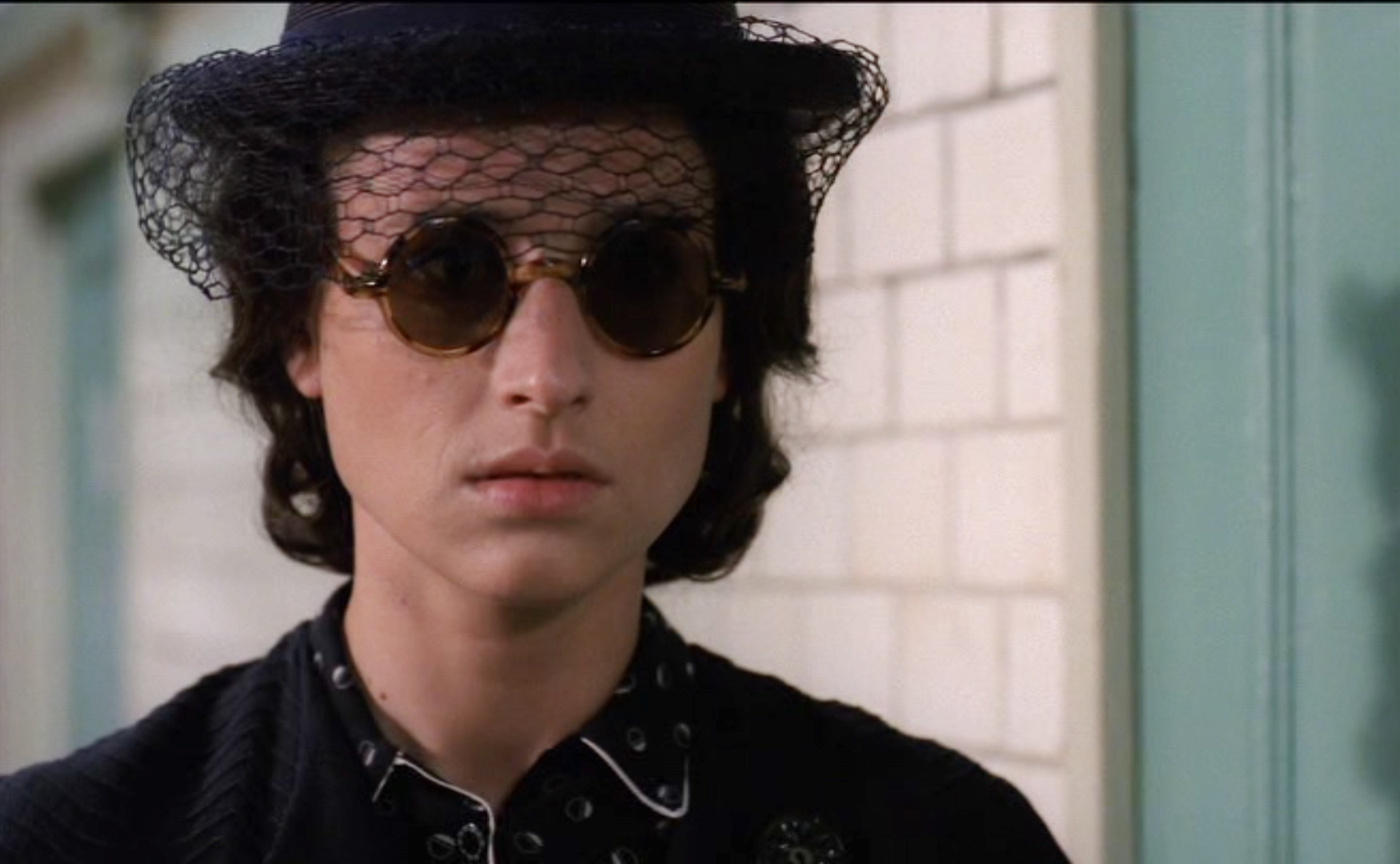
In some respects, the film mirrors the earlier DEFA film, Marriage in the Shadows, which is based on the true story of Joachim Gottschalk and Meta Wolff. Unlike that film, there is no suicide pact in The Actress. The book upon which the film is based, Arrangement with Death, follows the woman’s story through a concentration camp to her life afterward in East Germany. The movie wisely ends before that, allowing the viewer to see all the possible outcomes awaiting Manya/Maria and Mark..
The book upon which the film is based is by Hedda Zinner, a woman of many talents. Before the war, she wrote poems, social criticism, and satire for the various communist newspapers in Europe, including Die Rote Fahne (The Red Flag), Arbeiter Illustrierte Zeitung (Workers Illustrated Newspaper), and Der Weg der Frau (The Way of the Woman—an early feminist communist woman’s magazine). She also performed in theater revues and Kabarett.1
After the Nazis came to power, Zinner found things in Germany too hot for her, and left the country, eventually settling in Russia, where she wrote radio plays for Radio Moscow. Upon returning to the Soviet sector of Germany after the war, she became the general manager at Haus des Rundfunks (House of Broadcasting). Zinner was a prodigious writer, penning several plays, novels, and books of poems. After the Wende, she received the usual treatment of creative people from East Germany, which is to say, she was largely ignored. Sadly, none of her work is in print today, not even in ebook form, not even in Germany. Zinner died in 1994 in Berlin.

The film is directed by Siegfried Kühn, who co-wrote the screenplay with his wife, Regine Kühn. Siegfried Kühn had been slated to become a mining engineer, but decided to study film directing instead. His first feature film, Oni ne proydut (They Shall Not Pass), wasn’t made for DEFA, but for the Soviet film company, Mosfilm. Coming to DEFA, as he did, after the 11th Plenum, Kühn faced the occasional bureaucratic run-ins. His film, The Second Life of F.W.G. Platow was withheld from release for three years and only saw limited runs despite critical praise.
Kühn divorced Regine in 1980, but the two continued to write screenplays together right up until the end of DEFA. In 1991, Siegfried married Katrin Saß of Goodbye Lenin! fame (for more on Katrin Saß, see Until Death Do Us Part). That marriage lasted until 2007. After the Wende, Kühn’s career as a film director came to a halt. He made no more movies. Ex-wife Regine, on the other hand, had a thriving career in German television as a screenwriter.
The actress of the title is played by Corinna Harfouch. Harfouch was already an up-and-coming star in East Germany when she made this film, but The Actress sealed her reputation. Harfouch started appearing on the small screen in 1980 with an episode of Polizeiruf 110 and the TV-movie Die lange Ankunft des Alois Fingerlein (The Long Arrival of Alois Fingerlein). Her first feature film was the anthology film, Verzeihung, sehen Sie Fußball? (Sorry, You’re Watching the Game?). For her part in The Actress, she won the Best Actress award at the Karlovy Vary International Film Festival and the Eberswalde Film Festival. A year later, she was nominated again at Eberswalde for her performance in Treffen in Travers (Meeting in Travers).
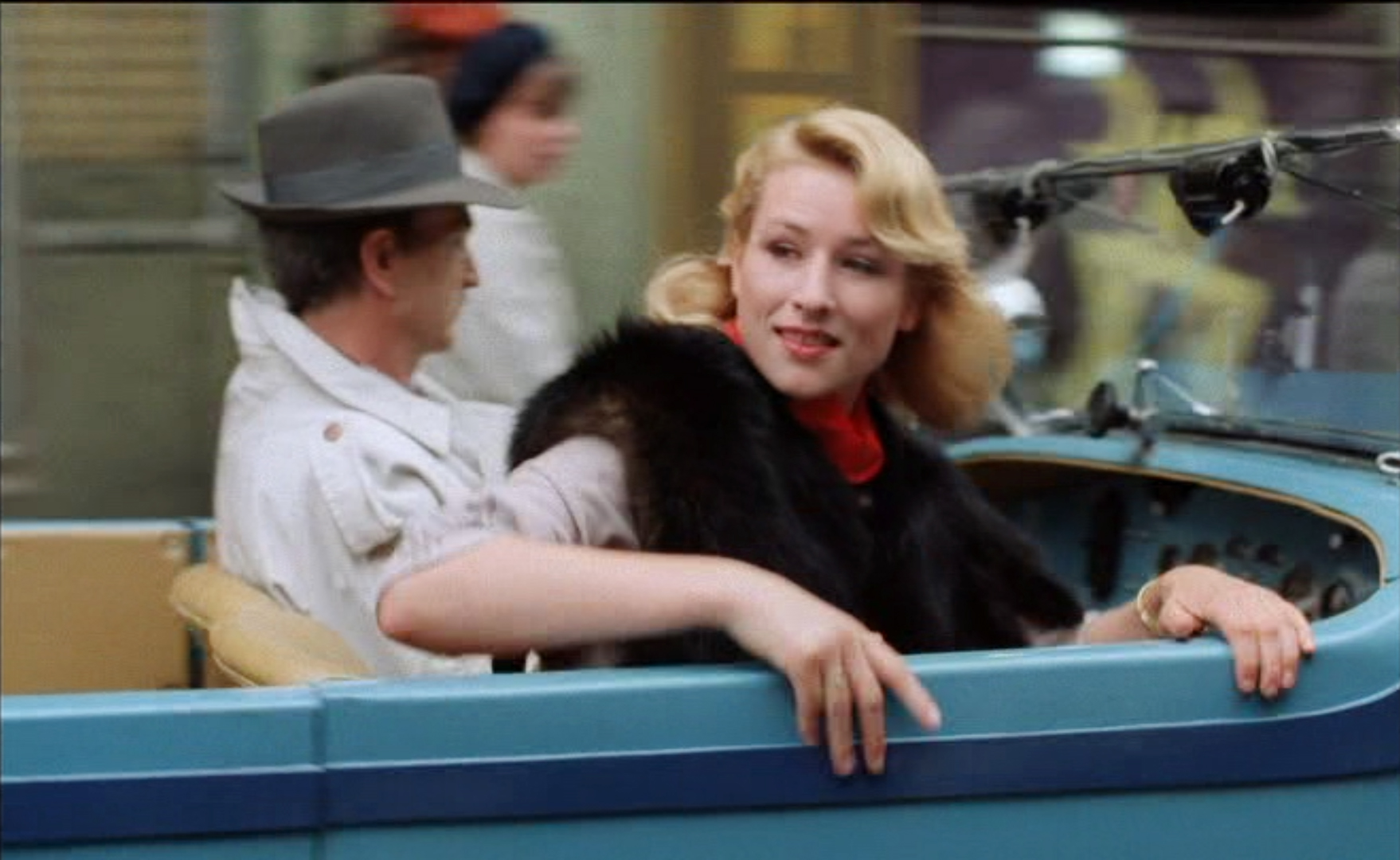
Born Corinna Meffert, the actress worked as a nurse while studying acting in Berlin. She married young to a Syrian computer scientist named Nabil Harfouch and took his name. When The Actress was filmed, Harfouch was married to Michael Gwisdek, who plays Mario, Maria Rheine’s devoted agent and confidant. Although she and Gwisdek parted ways in the 1990s, they did not officially divorce until 2007, most likely so that Gwisdek could remarry, which he did shortly thereafter.
Perhaps thanks to her talent and relative youth, Harfouch had an easier time than most East German actors transitioning to a unified Germany after the Wende. She continued to appear in movies and on TV, and played Eva Blond in the popular comedy-drama police series, Blond: Eva Blond! She is best known in the West for her chilling portrayal of Magda Goebbels in Downfall (Der Untergang). In 2007, she teamed up with fellow East German actors, Kristen Block, Dagmar Manzel, and Christine Schorn in Franziska Meletzky’s oddball comedy-drama Frei Nach Plan (According to the Plan); and in 2011—in one of the more unusual turn of events in human relationships—she co-starred with her ex, Michael Gwisdek, in the TV-movie Schmidt & Schwarz, which was written by Gwisdek’s current wife Gabriela.
Playing the part of Mark Löwenthal is André Hennicke. Hennicke studied acting at the Academy of Film and Television in Babelsberg. He got his start in in films in 1984 with Iris Gusner’s Kaskade rückwärts (Cascade Backwards), and has never stopped working since. Like Harfouch, the Wende had little impact on his career. He has appeared in several popular German films, including Jerichow, Antibodies, Downfall, and a nasty portrayal as the rabidly Nazi judge Roland Freisler in Sophie Scholl: The Final Days—a portrayal that may seem over-the-top until you see old footage of the actual man. Hennicke also pops up regularly on German television, appearing in everything from Tatort to Edel & Starck, and also made an appearance on Harfouch’s show Blond: Eva Blond! His appearances in English-language films include Pandorum, and David Cronenberg’s A Dangerous Method.
The Actress brings the curtain down before the real horror begins. In this respect, it has more in common with Jakob the Liar than it does with Marriage in the Shadows or Stars, both of which also address the issue of Jewish-Gentile relationships. The film did well at the box office and is listed as one of the top fifty most successful films of East Germany.
1. I’ve intentionally used the German word Kabarett here rather than “cabaret,” because, for Germans, the word Kabarett has a very different meaning from what we think of as cabaret. Although they both feature lots of singing, dancing, and skits, German Kabarett is often punctuated by satirical political skits and comedy monologues of the darkest humor.


If you like what I do here and would like to let me know, you can buy me a cup of coffee by clicking on the button to the left.
© Jim Morton and East German Cinema Blog, 2025. Unauthorized use and/or duplication of this material without express and written permission from this site’s author and/or owner is strictly prohibited. Excerpts and links may be used, provided that full and clear credit is given to Jim Morton and East German Cinema Blog with appropriate and specific direction to the original content.
 East German Cinema Blog
The Actress is a great film, showing what a brave, courageous, and highly-spirited woman can do just to be happy with the man she loves. It also shows the heartbreaking view of people against the Jewish in that era, and the plot was as realistic as it could get. It may take a while to appreciate the subtle inferences in the film, but once a viewer catches on, the compulsion to see the film to the end will be hard to ignore.