When the Berlin Wall finally opened in November of 1989, there were film scripts still waiting for approval at DEFA. It’s likely that some of these films would have either been cancelled or shelved upon completion a couple years earlier, but at this chaotic time, the officials seemed to say, “Aw hell, let ‘em make whatever they want!” As discussed in Movies Behind the Wall: The Story of East German Films and the Rise and Fall of the GDR, 1990 marked the beginning of a short golden era when East German filmmakers could explore previously taboo subjects and experiment with film styles and techniques. At last, they could create films that were neither restricted for political reasons in the East, nor rejected for their lack of box-office potential in the West. What resulted was some of the most original films that any nation’s film industry has ever seen. Films such as Latest from the Da-Da-R, The Land Beyond the Rainbow, and The Mistake.
One of the first out of the gate, so to speak, was Rolf Losansky’s Farewell Disco (Abschiedsdisco). Losansky specialized in films about teenagers, and this film is no exception. After the recent death of his girlfriend Silke, fifteen-year-old Henning Handschuh decides to visit his grandfather in Wussina, a small town in Lower Lusatia that was recently condemned by the government to make room for an open-pit lignite mine.
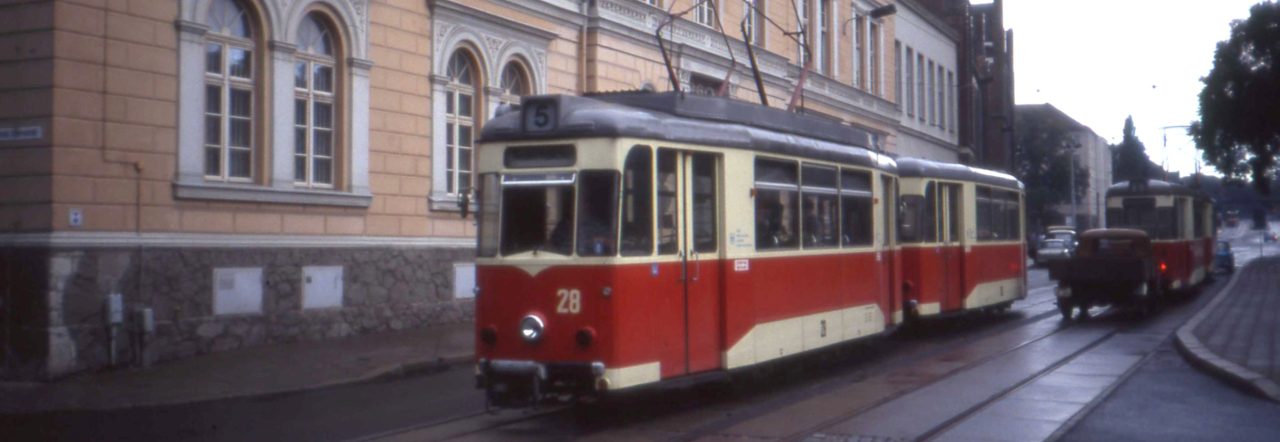
Lignite, also known as brown coal, is about the dirtiest source of energy still in use. While the German Democratic Republic (GDR) made pronouncements about the importance of being ecologically responsible, the inescapable fact was that the country had very few available energy sources. The United States had managed to rope the major oil producing countries into its alliance, and the USSR was less interested in helping East Germany after Gorbachev came to power. One thing East Germany had plenty of, however, was lignite. The easiest way to get lignite out of the ground is by open-pit mining. As the GDR expanded its efforts to mine lignite, residents of the smaller villages and towns found themselves on the receiving end of eviction notices.
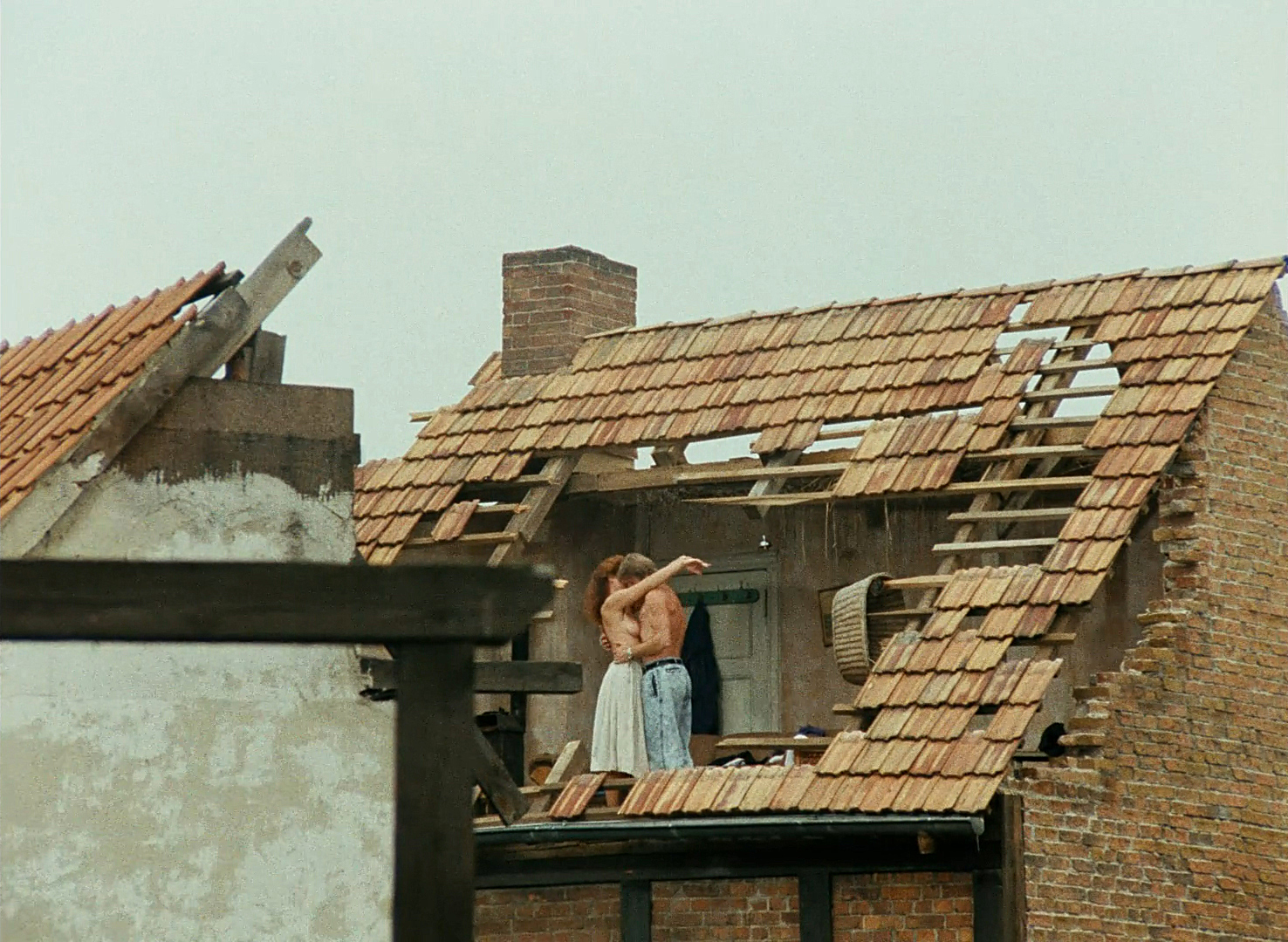
In Wussina, a few people, such as Henning’s grandfather (Horst Schulze) and an old widow (Annelise Matschulat), refuse to leave the area. Others use the evacuation for their own purposes. Henning meets these people along the way. These include an old coot (Fritz Marquardt) who’s trying to rescue the animals left in the village; a man (Wolfgang Winkler) and his young son, who are stealing as much stuff as they can find; and a young couple engaging in a romantic tryst on the second floor of one of a partially destroyed building.
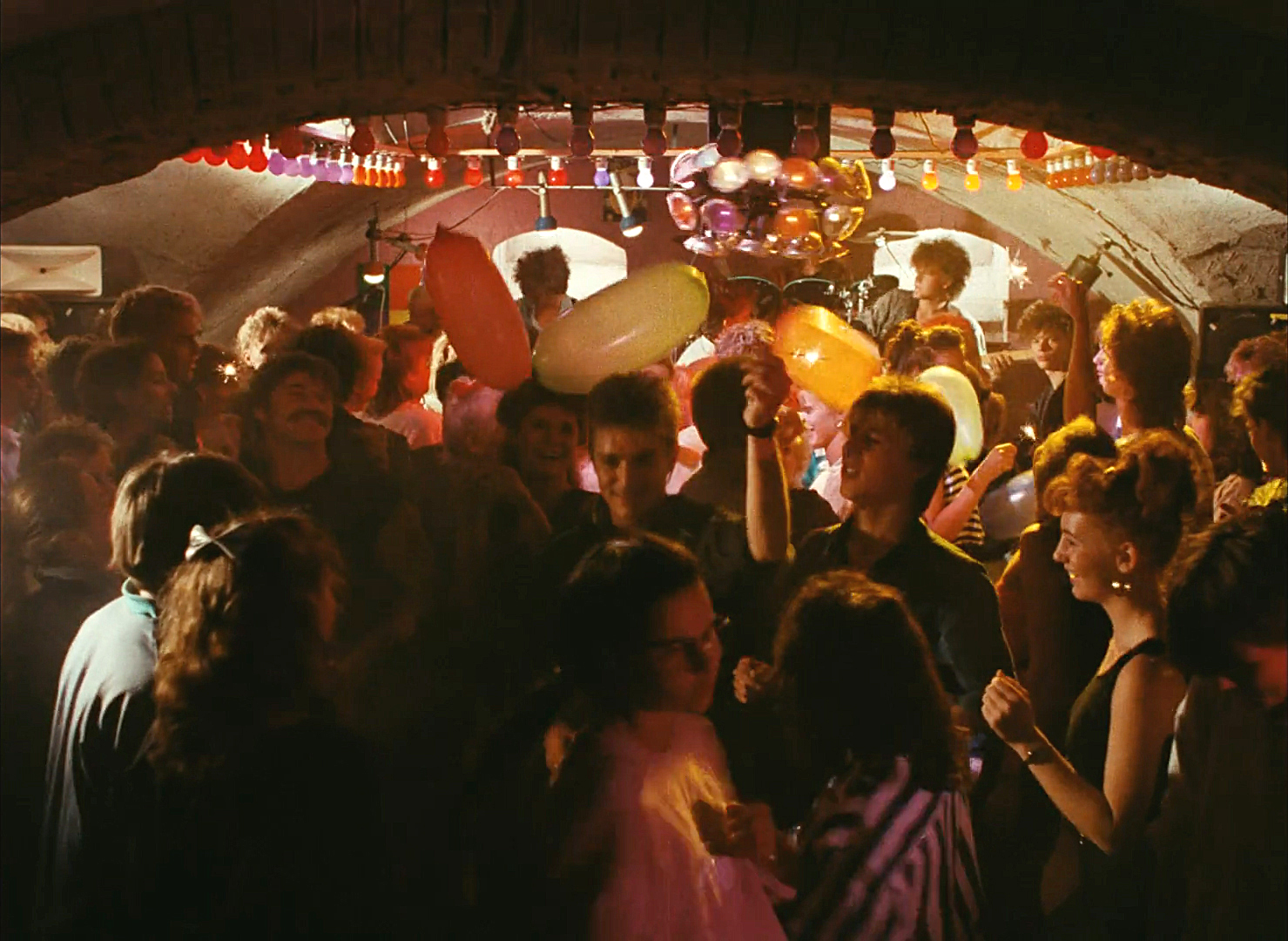
The title of the film comes from the basement disco run by Magda, a young woman who quixotically keeps the disco open, hoping people will return to the condemned town. The power has been shut off, but Magda has surreptitiously connected the disco to the power cables outside.
The film is based on a book by Joachim Nowotny. Nowotny grew up in Lusatia and he became one of the foremost East German authors to write about environmental concerns. His book, Der Riese im Paradies (The Giant in Paradise), also dealt with the destruction the open pit mines were causing. It was made into the movie Damn It, I’m Grown Up (…verdammt, ich bin erwachsen) in 1974, which was also directed by Rolf Losansky.
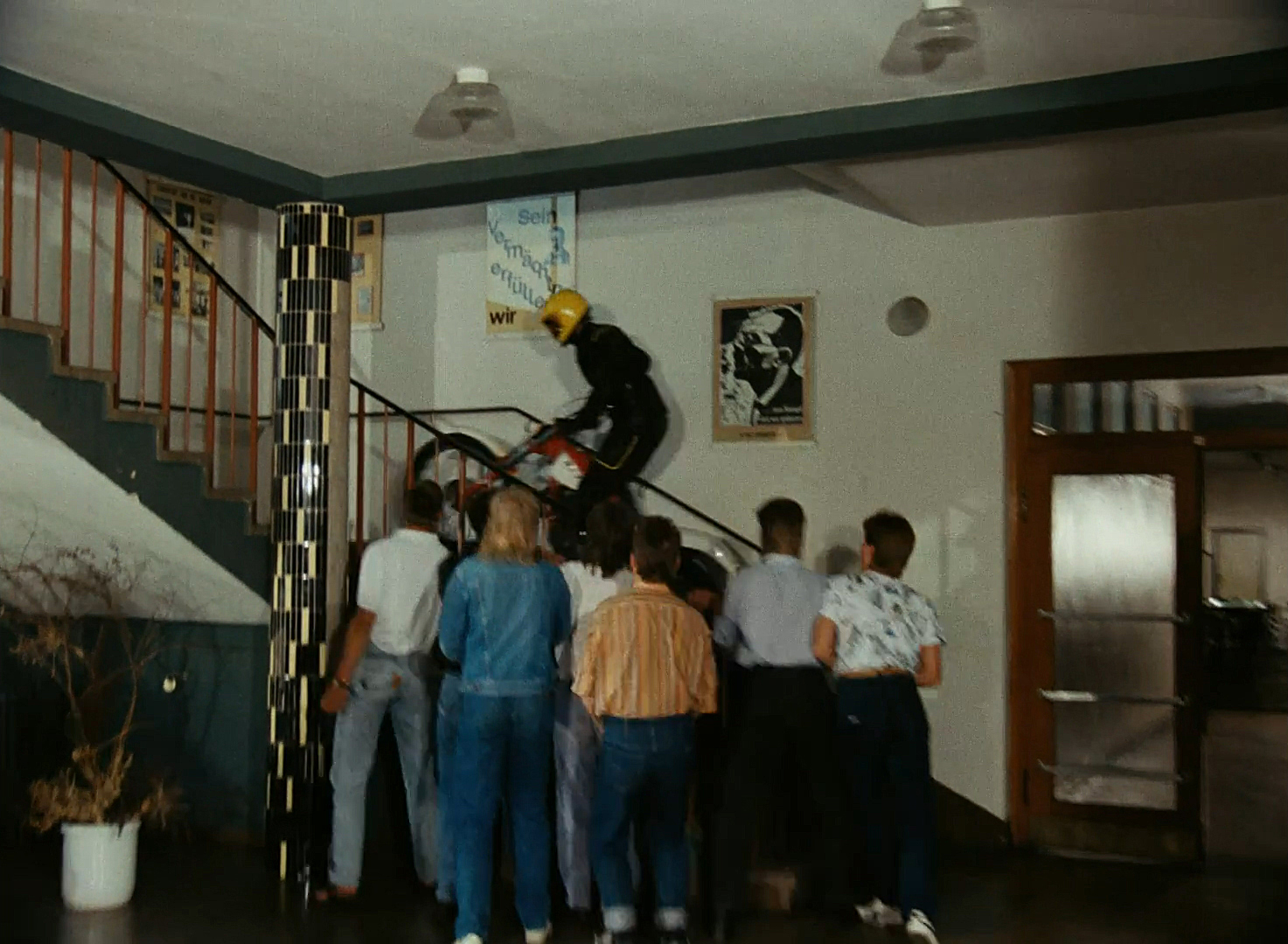
Losansky uses a film technique we’ve seen in several East German films, where daydreams intermittently interrupt the events in the real world. It’s an old technique (Fellini’s 8½ immediately comes to mind), and one that offers an equivalent to a literary technique on film. Like Billy Pilgrim in Slaughterhouse Five, young Henning bounces back and forth between time and space, unmoored from a linear narrative.
As with Damn It, I’m Grown Up, Losansky cast young people with little or no acting experience in lead roles and surrounded them with talented professionals, and—as with that film—the results were less than perfect. Holger Kubisch received the bulk of the criticism, with his performance being compared to that of a dead fish. It’s his only film.
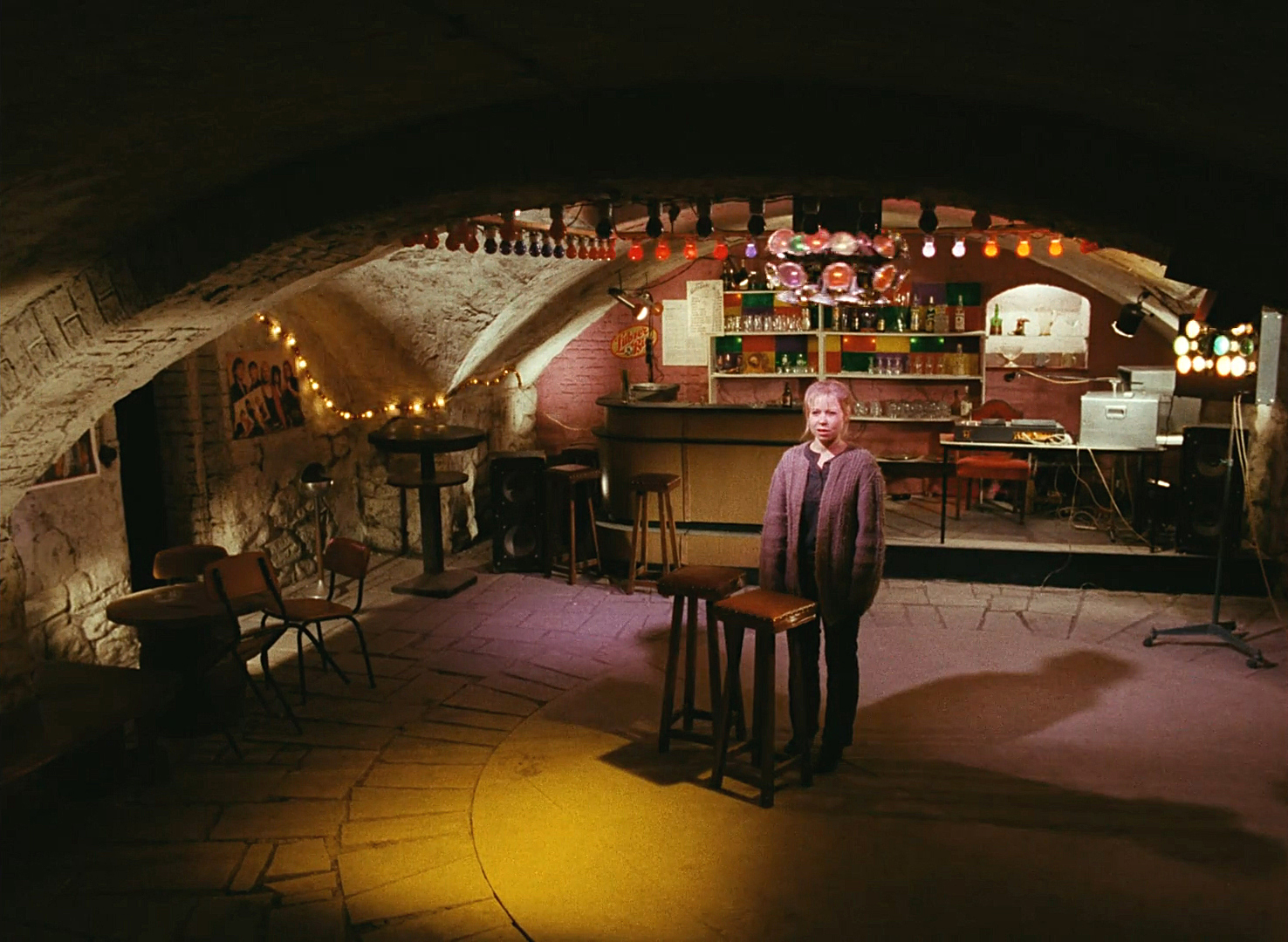
Losansky had initially submitted his first draft for Farewell Disco to the review board in 1986, but it was rejected at that time. Taking advantage of the loosening restrictions and general chaos in 1989, he was able to get the approval he needed to make the movie, but the movie was met with indifference. None of the East German films that came out in 1990 did well at the box office. West Germans were remarkably ignorant of the quality of films DEFA was making and chose to ignore them, while East Germans, still giddy about their new travel freedoms, were busy depleting West German stores of fruit, candy, and porn. Losansky might as well have named his film Farewell GDR.


If you like what I do here and would like to let me know, you can buy me a cup of coffee by clicking on the button to the left.
© Jim Morton and East German Cinema Blog, 2026. Unauthorized use and/or duplication of this material without express and written permission from this site’s author and/or owner is strictly prohibited. Excerpts and links may be used, provided that full and clear credit is given to Jim Morton and East German Cinema Blog with appropriate and specific direction to the original content.

