
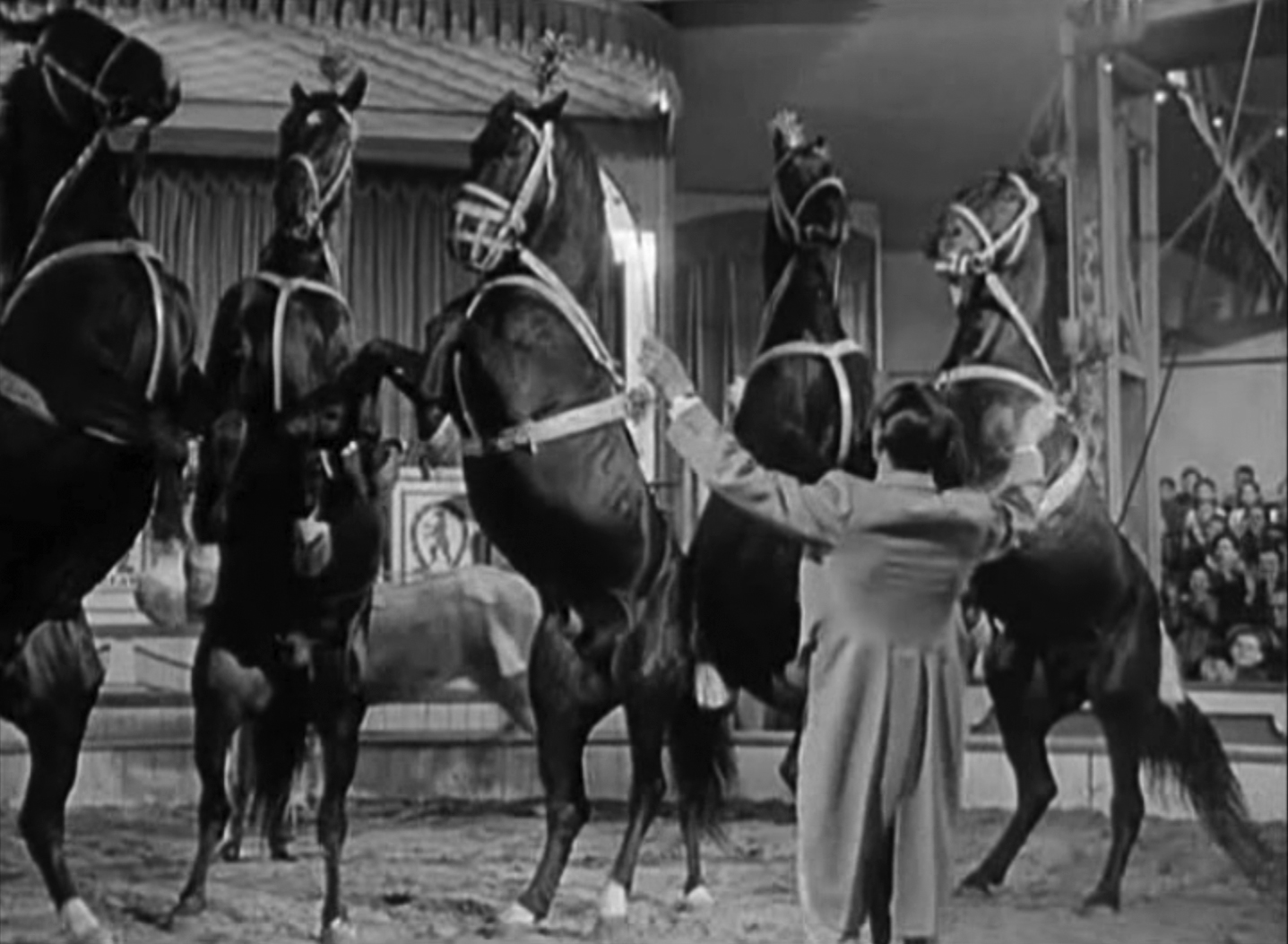
In 1954, a young director named Gerhard Klein teamed up with an even younger screenwriter named Wolfgang Kohlhaase, and the world of East German cinema would never be the same. The duo would go on to make several films together over the years. Alarm at the Circus (Alarm im Zirkus) was their first. At a time when most DEFA films concentrated on promoting a strong pro-socialist message, sometimes to the detriment of the story, Klein and Kohlhaase’s film put the story first. That’s not to say the film is apolitical. It makes a point of showing how a capitalist system’s lack of career opportunities for the underprivileged can lead to crime, but that message never interferes with the action, and it helps provide motivation for some of the film’s shadier characters.
The film follows the adventures of Max and Klaus, two poor kids in West Berlin who dream of becoming boxers. To get money to buy boxing gloves, the boys sell things they find and do odd jobs for Klott, a bar owner in West Berlin who uses the bar as his base of operations for illegal activities. After a trip to the Barlay Circus in East Berlin, the boys stumble on a plot concocted by Klott and a U.S. soldier to steal horses from the Circus. When one of the boys tries to warn the West German police about the plot, they essentially tell him to get lost, so he goes to the Volkspolizei (literally “people’s police”—East Germany’s police force) who spring into action.
This wasn’t the first film from DEFA to examine the criminal underworld in Berlin. That honor belongs to Razzia. But Razzia was made by a West German director (Werner Klingler) who was only working for DEFA because the U.S. military authority (OMGUS) was still restricting West German film production. In nearly every respect, Razzia is indistinguishable from the dozens of other “Krimi” films that Klingler would go on to make in the West. Alarm at the Circus, on the other hand, is East German right down to its roots. Kohlhaase and Klein were East Germans and proud of it. The heavies in this film are West Germans and the American soldiers who are orchestrating the crime.

Alarm at the Circus offered the realism that DEFA films demanded, but without the heroics normally associated with socialist realism. It’s closer in style to Italian neo-realism, a fact that bothered the authorities at that time and would continue to bother them right up until 1965, when the 11th Plenum put an end to that particular style of filmmaking at DEFA (truth be told, however, that style had already run its course in Italy years before). The fact that it’s based on an actual event probably helped it get made.
Alarm at the Circus was the first of a trio of films—along with A Berlin Romance and Berlin Schönhauser Corner—that is usually referred to as the Berlin trilogy. In truth, it is part of a continuum. Klein and Kohlhaase’s later film, Berlin Around the Corner, certainly fits in with the first three films the pair made, and would have made it a tetralogy had it not been banned after the 11th Plenum. Since Klein died in 1970 (see A Berlin Romance for more on Klein), we never got a chance to see more Berlin films by the duo, but Kohlhaase continued his explorations of the lives of the less privileged in Berlin with other directors, including Konrad Wolf (Solo Sunny) and Andreas Dresen (Summer in Berlin—Sommer vorm Balkon).
Wolfgang Kohlhaase was only twenty-two when he started writing scripts for DEFA. He wrote a few for the “Das Stacheltier” group that made short films to accompany the features, and a script for the children’s film Die Störenfriede (The Troublemakers). The following year, he joined forces with Gerhard Klein. Klein was a born-and-bred Berliner (echter Berliner) and wanted to make a film that reflected the reality of life in the city. He wanted to capture the rhythms and cadences of Berlin speech and actions. He found the perfect partner in Kohlhasse. Kohlhasse’s ear for Berlinerisch—that peculiar style of German used in Berlin—is especially acute, and he used it often (to best effect in Solo Sunny). After the Wende, Kohlhasse continued to write screenplays. His work includes Volker Schlöndorff’s The Legend of Rita (Die Stille nach dem Schuß), and Andreas Dresen’s Summer in Berlin (Sommer vorm Balkon) and Whiskey with Vodka (Whisky mit Wodka). Kohlhasse died in October 2022. He was 91 years old.
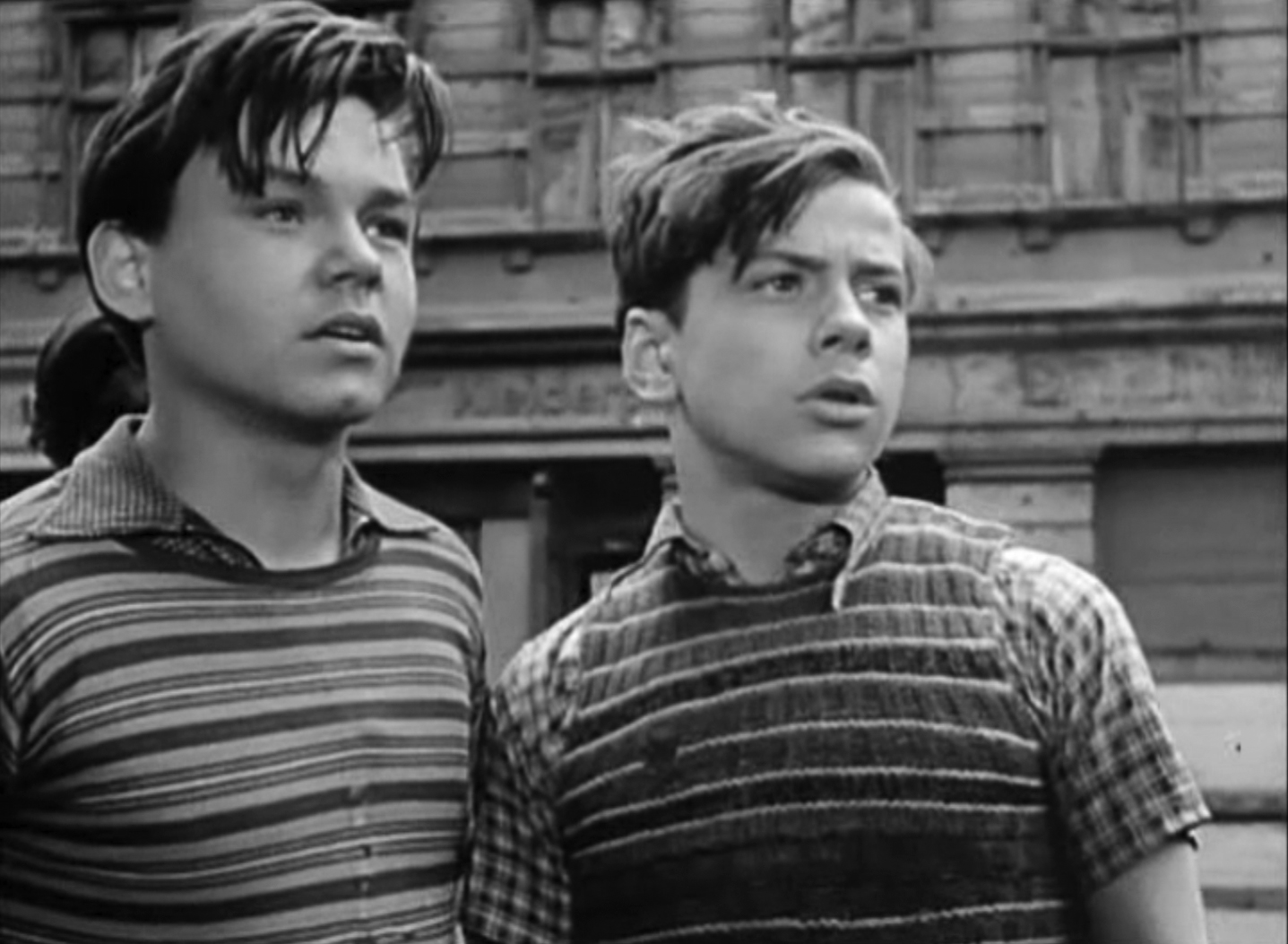
The actors who played Max and Klaus, were not picked from the usual acting roster but chosen from a home for troubled youths. Klein gets remarkably good performances out of these novice actors. For Hans Winter, who played Klaus, this would be his only film, but Ernst-Georg Schwill, who played Max, decided that he liked working in the movies, and began training as a cameraman, later returning to acting and appearing in all three of Klein’s Berlin trilogy films, as well as roles in Five Cartridges, Close to the Wind, Motoring Tales, and many others. After the Wende, he experienced less neglect than some other East German actors. Film and television companies were always looking for people to play supporting roles, and Schwill was quick to admit that he was a character actor, not a star. It wasn’t long before he was busy acting again, appearing on TV and in films regularly, most recently in Andreas Schap’s Das letzte Abteil (The Last Department).
The Barlay Circus (Zirkus Barlay) was a real circus, located at Friedrichstraße 107, the current site of the Friedrichstadt Palast. The circus was founded in 1935, when Reinhold Kwasnik, who used the stage name Harry Barlay, bought a bankrupt circus and made it his own. When Kwasnik fled to West Germany, the circus was taken over by the state. After a couple of name changes, it was eventually consolidated with other East German circuses as the Staatszirkus der DDR (State Circus of the GDR). With the reunification of Germany, the State Circus was broken up, and the circus that was once the Barlay Circus ended life the same way it began: with bankruptcy.


If you like what I do here and would like to let me know, you can buy me a cup of coffee by clicking on the button to the left.
© Jim Morton and East German Cinema Blog, 2025. Unauthorized use and/or duplication of this material without express and written permission from this site’s author and/or owner is strictly prohibited. Excerpts and links may be used, provided that full and clear credit is given to Jim Morton and East German Cinema Blog with appropriate and specific direction to the original content.
 East German Cinema Blog